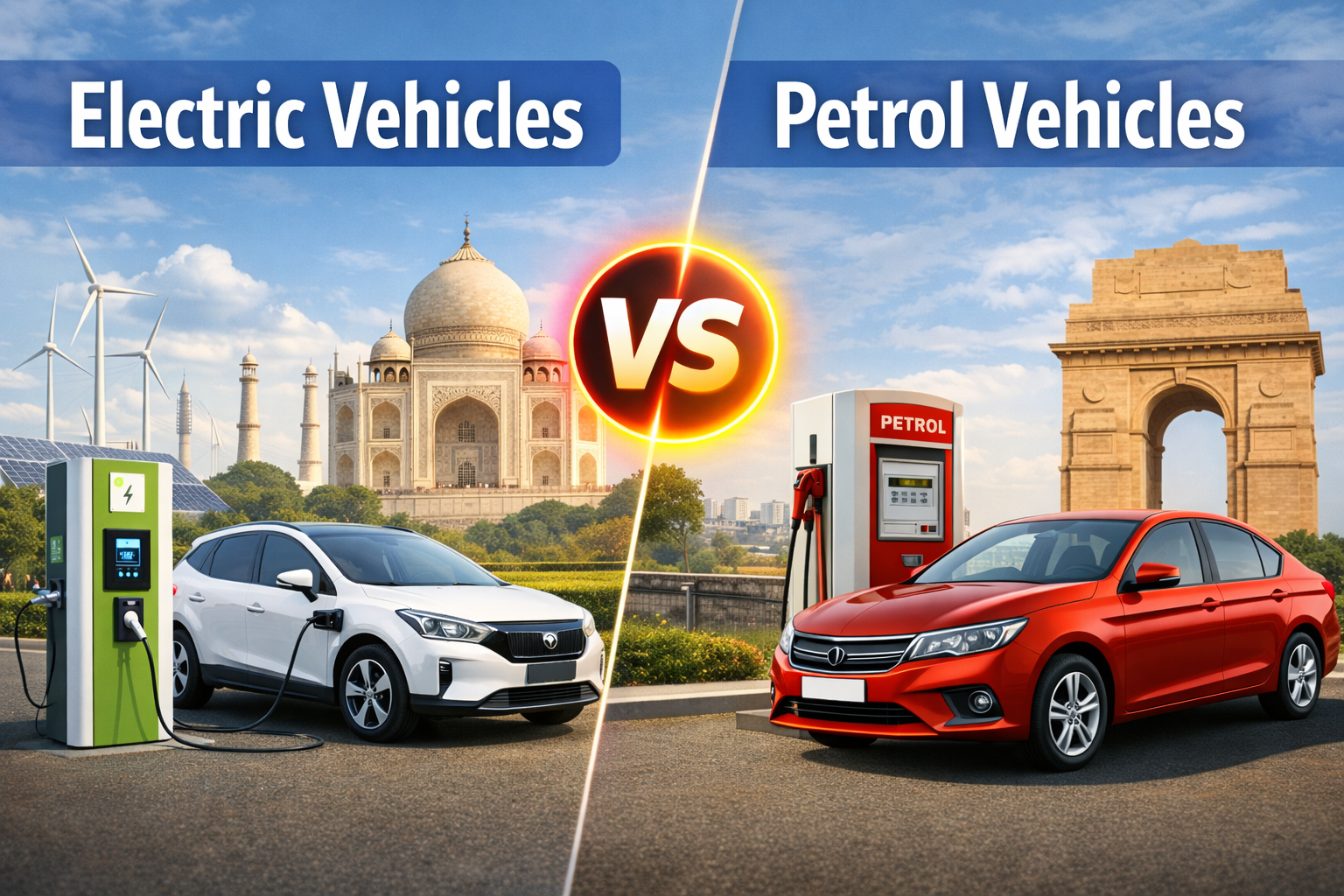
The way people choose vehicles in India is slowly changing. For many years, petrol vehicles were the default choice for personal and commercial transport. They were easy to buy, easy to refuel, and supported by a strong fuel station network. However, rising petrol prices, increasing air pollution, and growing awareness about environmental issues have encouraged people to look for better alternatives. This is where electric vehicles (EVs) have entered the conversation.
Electric vehicles are no longer just a future idea or a luxury option. Today, they are becoming a practical choice for daily commuting, especially in cities. At the same time, petrol vehicles continue to dominate Indian roads because of their long driving range, quick refueling, and wide availability. This has created a common question among buyers: Should I choose an electric vehicle or a petrol vehicle?
The answer is not the same for everyone. Each type of vehicle has its own strengths and limitations. Electric vehicles offer lower running costs, quieter driving, and zero exhaust emissions, making them attractive for people who travel short distances regularly. Petrol vehicles, on the other hand, provide convenience for long journeys and are supported by a familiar refueling system that has existed for decades.
This comparison is not about declaring one option as perfect and the other as outdated. Instead, it is about understanding how both technologies fit into real Indian driving conditions. Factors such as daily travel distance, availability of charging or fuel stations, budget, maintenance needs, and environmental concerns all play an important role in the decision-making process.
In this article, we will explore the differences between electric vehicles and petrol vehicles in a clear and practical way. The goal is to help readers understand how each option works, what they offer, and which one may be more suitable for their lifestyle and driving needs. With honest information and a balanced approach, choosing the right vehicle becomes easier and more informed. Electric Vehicles vs Petrol Vehicles:
Choosing between an electric vehicle (EV) and a petrol vehicle is becoming a common question for Indian buyers. With rising fuel prices, increasing pollution, and new technology, many people want to know:
This article gives a clear, simple, and honest comparison to help you understand the real differences.
No hype. No misleading claims. Just practical information for everyday users.
1. Electric Vehicles vs Petrol Vehicles: Basic Difference
| Feature | Electric Vehicle (EV) | Petrol Vehicle |
|---|---|---|
| Fuel | Electricity | Petrol |
| Engine | Electric Motor | Internal Combustion Engine |
| Emissions | Zero tailpipe emissions | Produces pollution |
| Noise | Very quiet | Noisy |
| Maintenance | Low | Higher |
| Fuel Cost | Low | High |
2. Running Cost: EV vs Petrol
Electric Vehicle Cost
Charging an EV is usually much cheaper than buying petrol.
- Home charging is affordable
- Fewer moving parts
- Less servicing required
Petrol Vehicle Cost
- Fuel prices keep increasing
- Regular servicing needed
- More mechanical wear
Verdict:
EVs are cheaper to run in daily use, especially in cities.
3. Purchase Price: Which Is Cheaper?
Electric Vehicles
- Higher upfront cost
- Battery is expensive
- Prices are slowly coming down
Petrol Vehicles
- Lower starting price
- Many budget options
- No battery cost
Verdict:
Petrol vehicles are cheaper to buy, but EVs save money in the long term.
4. Maintenance & Servicing
EV Maintenance
- No oil changes
- Fewer mechanical parts
- Lower service cost
Petrol Vehicle Maintenance
- Regular oil changes
- Engine parts wear out
- Higher service cost
Verdict:
EVs require less maintenance and are simpler to own.
5. Environmental Impact
Electric Vehicles
- No exhaust smoke
- Reduce air pollution
- Support clean energy
Petrol Vehicles
- Produce harmful gases
- Increase air pollution
- Harm public health
Verdict:
EVs are better for the environment and city air quality.
6. Driving Experience
EV Driving
- Smooth acceleration
- Quiet operation
- Easy to drive
Petrol Driving
- Engine noise
- Gear shifting
- Slower acceleration
Verdict:
EVs offer a more comfortable city driving experience.
7. Charging vs Fueling
EV Charging
- Can charge at home
- Takes more time
- Public chargers are increasing
Petrol Refueling
- Very fast
- Easily available
- But fuel is costly
Verdict:
Petrol is faster, but EV charging is more convenient for home users.
8. Range & Daily Use
Electric Vehicles
- Best for city travel
- Daily range is enough
- Planning needed for long trips
Petrol Vehicles
- Long range
- No charging concerns
- Better for highways
Verdict:
EVs are ideal for daily commuting, while petrol vehicles are easier for long journeys.
9. Safety
Modern EVs include:
- Battery protection systems
- Temperature control
- Fire safety features
Petrol vehicles have:
- Fuel safety systems
- Engine protection
Verdict:
Both are safe when used properly and maintained well.
10. Noise & Comfort
EVs are very quiet, which:
- Reduces noise pollution
- Improves city comfort
- Makes driving peaceful
Petrol vehicles are louder, especially in traffic.
11. Government Support
EVs receive:
- Purchase incentives
- Policy support
- Charging infrastructure investment
Petrol vehicles do not receive such benefits.
12. Long-Term Ownership
EV Owners
- Save on fuel
- Lower servicing cost
- Eco-friendly
Petrol Owners
- Spend more on fuel
- Higher maintenance
- More pollution
13. Which One Should You Choose?
Choose Electric Vehicle if:
- You drive mostly in the city
- You want low running cost
- You care about the environment
- You can charge at home
Choose Petrol Vehicle if:
- You travel long distances often
- Charging access is limited
- You want quick refueling
- Budget is very tight
Internal Link And Outer Links Original Links
1- Electric Vehicles in India 2026
2- Hero Electric flash Scooter
14. Future of EV vs Petrol in India
By 2026 and beyond:
- EVs will become more affordable
- Charging networks will expand
- Battery technology will improve
- Petrol vehicles will slowly reduce
India is moving toward clean mobility.
15. Final Conclusion
Electric vehicles are not perfect, but they offer:
- Lower running cost
- Cleaner environment
- Better city driving experience
Petrol vehicles are still useful for:
- Long trips
- Rural areas
- Quick refueling needs
Both have their place today, but the future is clearly shifting toward electric mobility.
Frequently Asked Questions –
What is the main difference between electric and petrol vehicles?
Electric vehicles run on electricity using batteries, while petrol vehicles run on fuel using an internal combustion engine.