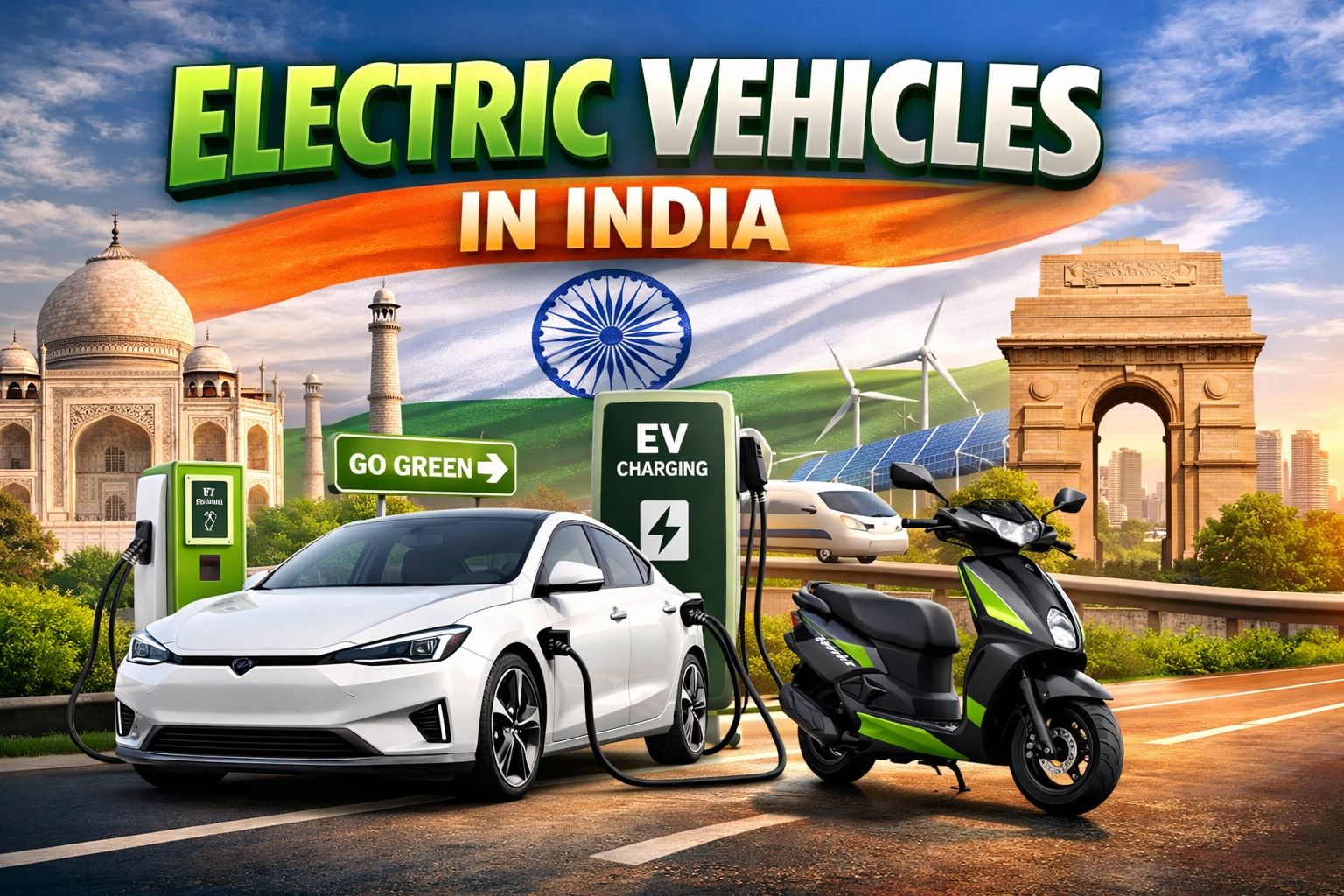
India is standing at a historic turning point in its transportation journey. With rising fuel prices, increasing pollution, and a strong push for sustainability, Electric Vehicles (EVs) are no longer just a future concept—they are becoming a practical reality. The rise of Electric Vehicles in India marks a significant step towards sustainable transportation.
By 2026, India is expected to witness a major transformation in how people travel, commute, and transport goods. Electric vehicles are set to play a central role in this change, offering cleaner, quieter, and more efficient mobility solutions.
This article provides a complete, simple, and honest overview of the electric vehicle ecosystem in India, covering:
- What EVs are
- Why they matter
- Current market status
- Government policies
- Charging infrastructure
- Challenges
- Future outlook
All information is shared in a human-friendly, informational, and responsible manner.
What Are Electric Vehicles?
Electric Vehicles (EVs) are vehicles that run on electricity instead of petrol or diesel. They use:
- Electric motors
- Rechargeable batteries
- Power control systems
Unlike traditional vehicles, EVs do not produce exhaust emissions while driving.
Types of Electric Vehicles
Understanding the impact of Electric Vehicles in India is crucial for the future of clean mobility in the country.
- Battery Electric Vehicles (BEVs)
Fully electric, no fuel engine
Example: Tata Nexon EV, MG Comet - Hybrid Electric Vehicles (HEVs)
Use both fuel and electric power - Plug-in Hybrid EVs (PHEVs)
Can be charged externally - Electric Two-Wheelers & Three-Wheelers
Popular for daily commuting and delivery services
In India, BEVs and electric two/three-wheelers are growing the fastest.
2. Why Electric Vehicles in India Matter
India faces major environmental and energy challenges:
- High air pollution
- Dependence on imported oil
- Traffic congestion
- Rising fuel costs
Electric vehicles offer practical solutions:
Environmental Benefits
- Zero tailpipe emissions
- Reduced air pollution
- Lower noise levels
Economic Benefits
- Lower running cost
- Reduced fuel dependency
- Growing EV industry jobs
Energy Security
- Supports renewable energy usage
- Reduces oil imports
EVs are not just vehicles—they are part of India’s sustainability mission.
3. Current EV Market in India (2025–2026)
India’s EV market is growing steadily, especially in:
- Two-wheelers
- Three-wheelers
- City cars
- Commercial fleets
Key Trends
- Increased EV sales in urban areas
- Better charging infrastructure
- More affordable models
- Growing public awareness
Popular EV Segments
| Segment | Adoption Level |
|---|---|
| E-Scooters | High |
| E-Rickshaws | Very High |
| Electric Cars | Moderate |
| Electric Buses | Growing |
Electric mobility is becoming more accessible to common people.
4. Government Support & EV Policies
The Indian government is actively supporting EV adoption through:
FAME Scheme (Faster Adoption and Manufacturing of Electric Vehicles)
- Subsidies on EV purchases
- Support for charging infrastructure
- Encouragement for manufacturers
State-Level EV Policies
Many states like:
- Delhi
- Maharashtra
- Tamil Nadu
- Gujarat
offer additional benefits such as:
- Road tax exemption
- Registration fee waiver
- EV incentives
Public Transport Electrification
- Electric buses in cities
- Metro feeder EV services
- Green mobility plans
Government initiatives aim to make EVs affordable and practical.
5. Charging Infrastructure in India
Charging is one of the most important parts of EV growth.
Types of Charging
- Home Charging
Slow but convenient - Public Charging Stations
Available in cities and highways - Fast Charging
Quick charging for commercial use
Current Status
- More charging stations than before
- Highways now have EV chargers
- Malls, offices, and parking areas installing chargers
Challenges
- Limited rural coverage
- Charging time
- Standardization issues
By 2026, charging networks are expected to become more reliable and widespread.
6. Electric Two-Wheelers: India’s EV Backbone
Electric scooters and bikes are the most popular EVs in India.
Why They Are Popular
- Affordable
- Easy to charge
- Ideal for city use
- Low maintenance
Use Cases
- Daily commuting
- Food delivery
- Ride-sharing services
Electric two-wheelers are helping millions shift to clean mobility.
7. Electric Cars in India
Electric cars are slowly becoming more common in Indian cities.
Benefits
- Quiet driving
- Smooth performance
- Low running cost
- Zero emissions
Common Use
- Urban commuting
- Corporate fleets
- Personal city cars
Challenges
- Higher upfront cost
- Limited long-distance charging
- Battery concerns
Despite challenges, EV cars are gaining public trust.
8. Electric Buses & Public Transport
Electric buses are transforming city transport.
Advantages
- Reduced air pollution
- Lower operating cost
- Quiet city roads
Many cities now operate:
- Electric city buses
- Airport EV shuttles
- Metro feeder buses
Public transport electrification helps improve urban air quality.
9. Battery Technology & Recycling
Batteries are the heart of EVs.
Current Battery Types
- Lithium-ion batteries
- LFP (Lithium Iron Phosphate)
- NMC batteries
Focus Areas
- Longer range
- Faster charging
- Safety improvements
- Recycling systems
Battery Recycling in India
Recycling helps:
- Reduce waste
- Recover valuable materials
- Support sustainability
Battery innovation will define the future of EVs.
10. EV Manufacturing & “Make in India”
India is working toward local EV manufacturing.
Benefits
- Job creation
- Lower costs
- Supply chain control
- Economic growth
Many companies are setting up:
- EV factories
- Battery plants
- Charging equipment units
Local manufacturing supports self-reliance.
11. Challenges in EV Adoption
While EV growth is promising, challenges remain:
Infrastructure Gaps
- Limited rural chargers
- Power supply issues
Cost Barriers
- Higher purchase price
- Battery replacement cost
Awareness
- EV myths
- Range anxiety
- Charging doubts
Technical Issues
- Battery life
- Charging speed
Addressing these challenges is key to sustainable growth.
12. EVs & Renewable Energy
Electric vehicles work best with clean energy.
Solar + EV
- Solar charging stations
- Rooftop solar EV charging
Wind + EV
- Green energy support
- Reduced carbon footprint
Combining EVs with renewable energy makes mobility truly eco-friendly.
13. Employment & Skill Development
EV growth creates new jobs:
- EV technicians
- Charging station operators
- Battery engineers
- Software developers
Skill development programs help prepare the workforce for a green economy.
14. Rural EV Potential
EVs are not just for cities.
Rural Applications
- Electric tractors (limited use)
- E-rickshaws
- Delivery vehicles
- Agricultural transport
With proper infrastructure, EVs can support rural development.
15. Safety & EV Technology
Modern EVs focus on safety:
- Battery protection systems
- Fire prevention features
- Smart monitoring
Safety standards are continuously improving.
16. EV Myths vs Reality
| Myth | Reality |
|---|---|
| EVs are slow | EVs offer instant torque |
| Charging is impossible | Charging network is expanding |
| Batteries fail quickly | Battery life is improving |
| EVs are unsafe | Safety standards exist |
Education helps remove misunderstandings.
17. What to Expect by 2026
By 2026, India may see:
- More affordable EVs
- Better charging access
- Stronger battery tech
- Cleaner cities
- Higher EV adoption
EVs will become part of daily life.
18. The Role of Consumers
Consumers play a vital role by:
- Choosing cleaner transport
- Supporting sustainability
- Sharing EV awareness
- Demanding better infrastructure
Every EV choice supports a greener future.
19. Future Innovations
Upcoming EV technologies may include:
- Solid-state batteries
- Wireless charging
- Smart grid integration
- AI-based energy management
Innovation will drive efficiency and reliability.
20. Conclusion: India’s Electric Journey
Electric vehicles are not just a trend—they represent a long-term shift toward sustainable mobility.
India’s EV journey is built on:
- Government support
- Public awareness
- Technological innovation
- Environmental responsibility
Frequently Asked Questions (FAQs)
What are electric vehicles (EVs)?
Electric vehicles are vehicles that run on electricity instead of petrol or diesel. They use rechargeable batteries and electric motors, which help reduce air pollution and fuel consumption.
Why are electric vehicles important for India?
EVs help reduce air pollution, lower fuel imports, and support clean energy goals. They also offer lower running costs and promote sustainable transportation.
How many types of electric vehicles are available in India?
India mainly has:
Electric two-wheelers
Electric three-wheelers (e-rickshaws)
Electric cars
Electric buses
Battery Electric Vehicles (BEVs) are the most common
Is charging infrastructure improving in India?
Yes. Public charging stations are increasing in cities, highways, malls, offices, and parking areas. Home charging is also becoming more common.
Are electric vehicles cheaper to run?
EVs usually have lower running and maintenance costs compared to petrol or diesel vehicles. Electricity is more affordable than fuel, and EVs have fewer moving parts.